Idioma / Language: Español · English
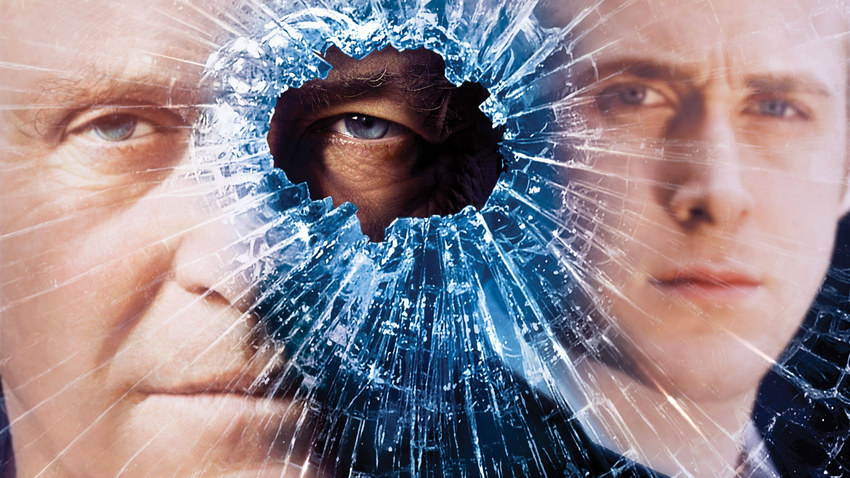
La película de Gregory Hoblit (2007) como recurso para el aula: un ingeniero dispara a su mujer, sale absuelto y se cree a salvo para siempre. Cuando ella muere, el fiscal quiere juzgarle de nuevo. ¿Puede hacerlo?
Revisamos la pistola, los residuos de disparo, la confesión y la autopsia que la película no enseña, y comprobamos qué habría pasado con Ted Crawford ante la justicia española en noviembre de 2026.
Autora: Manuela González
Un ingeniero en busca del punto débil. ¡Atención! Aquí contamos la película entera, final incluido
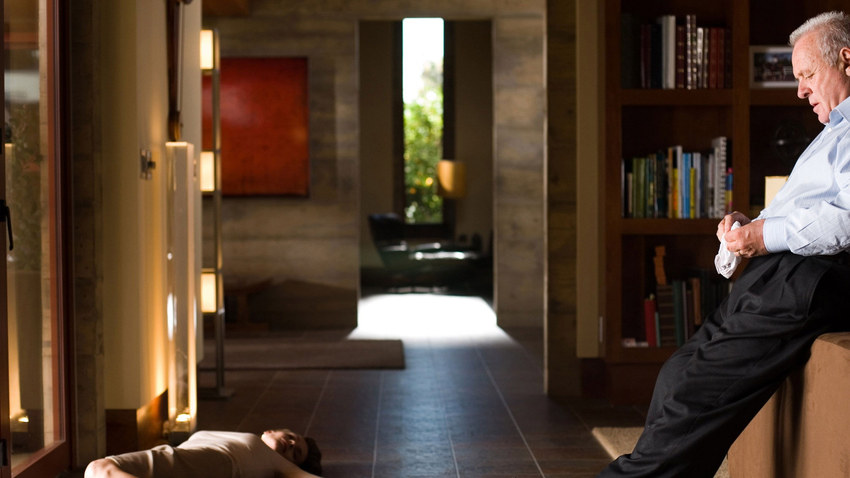
Ted Crawford (Anthony Hopkins) es un ingeniero aeronáutico rico de Los Ángeles, acostumbrado a encontrar por dónde fallan las cosas. Su mujer, Jennifer (Embeth Davidtz), se ve dos veces por semana en el hotel Miramar con un hombre que firma como «señor Smith». Es el teniente Rob Nunally (Billy Burke), negociador de rehenes de la policía de Los Ángeles, que ni siquiera sabe el apellido real de ella. Ted lo descubre, compra una pistola del mismo modelo que lleva Nunally y, una tarde, mientras los amantes están en la piscina, entra en la habitación y cambia su pistola por la del policía. Esa noche espera a Jennifer en casa, la llama «señora Smith» para que sepa que lo sabe y le dispara en la cara.
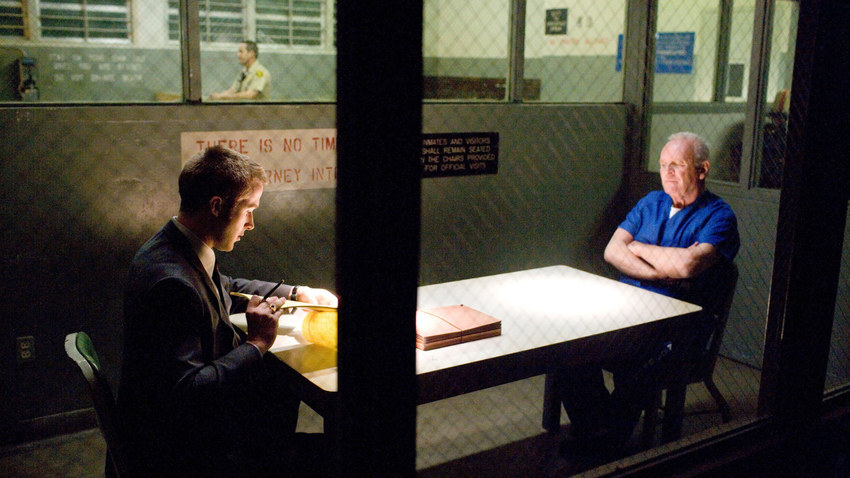
Jennifer sobrevive, en coma. La policía rodea la casa por si hay un rehén y quien entra a negociar es, precisamente, Nunally. Ted le pide que dejen las armas en el suelo a la vez y confiesa. Cuando el teniente reconoce a la mujer tendida en el suelo, se lanza contra Ted y le golpea, y en ese momento de confusión Ted vuelve a cambiar las pistolas. Nunally sale de la casa con el arma del crimen en la cadera, y la pistola que la policía recoge como prueba, la de Ted, no se ha disparado nunca. En comisaría, con Nunally presente en la sala, Ted firma una confesión sin abogado.
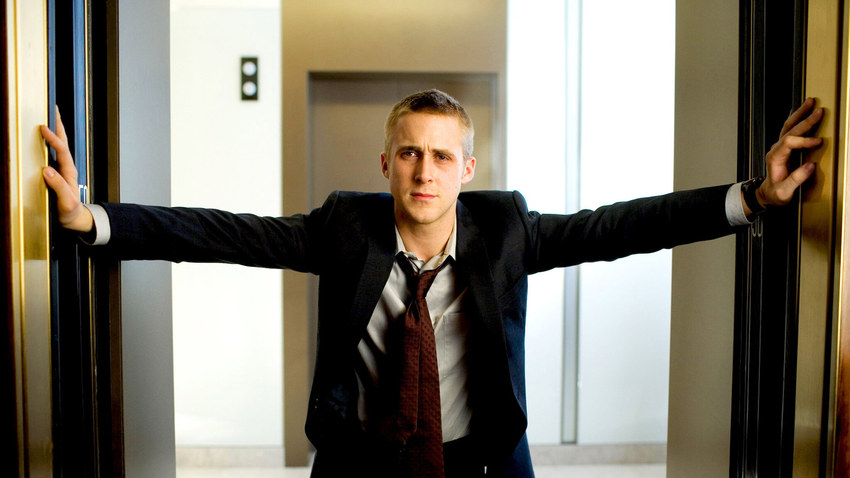
El caso, una tentativa de asesinato que parece resuelta, le toca a Willy Beachum (Ryan Gosling), fiscal adjunto con un 97 % de condenas que está a punto de irse al bufete Wooton Sims, donde le espera como jefa Nikki Gardner (Rosamund Pike). Ted renuncia a tener abogado y se defiende él mismo. En pleno juicio revela que el agente que le detuvo e interrogó se acostaba con la víctima, y la jueza Robinson (Fiona Shaw) excluye las dos confesiones, la de la casa y la firmada, como obtenidas bajo coacción y «fruto del árbol envenenado». Nunally le propone a Willy cambiar los casquillos del almacén de pruebas; alguien llega a esconder una pistola falsa en el cobertizo de Ted, pegada con cinta a la cuchilla del cortacésped, y Willy decide en el último momento no usarla. Sin arma y sin confesión, Ted pide la absolución por insuficiencia de pruebas, la jueza se la concede y despide al jurado. Nunally se suicida junto al juzgado con su propia pistola, que es la del crimen.
Ted es el representante sanitario de Jennifer y decide desconectarla. Willy, ya sin el puesto en el bufete, consigue de un juez una orden para mantenerla con vida, pero llega cuando están apagando el respirador. Poco después descubre el truco: la bala sigue en la cabeza de Jennifer, no podía extraerse mientras estaba viva y ahora sí, y está «bastante seguro» de que coincidirá con la pistola de Nunally. Ted, convencido de que no se le puede juzgar dos veces, le cuenta a Willy con todo detalle cómo lo hizo. Willy le responde que le juzgaron por una tentativa, que ahora su mujer ha muerto y que eso es un asesinato, con cargos nuevos, pruebas nuevas y un juicio nuevo. La policía, que esperaba fuera, le detiene. En la última escena, Ted se sienta en el banquillo rodeado de abogados, y el fiscal es Willy.
Fracture (Gregory Hoblit, 2007) nació de una idea de Daniel Pyne que Castle Rock compró en 1999 y que Glenn Gers reescribió en 2005, cuando el proyecto pasó a New Line con Hopkins y Gosling. Se estrenó en Estados Unidos el 20 de abril de 2007 y en España el 19 de octubre del mismo año, con su título original; en Hispanoamérica se tituló Crimen perfecto. Según el catálogo del ICAA, en España la vieron 310.717 espectadores y recaudó 1,76 millones de euros, y en todo el mundo superó los 92 millones de dólares. La frase que resume al protagonista se la dice Ted a Willy al hablar de su abuelo, que miraba los huevos al trasluz: si uno mira con atención, todo tiene un punto débil por donde puede romperse tarde o temprano (traducción propia de la versión original).
No hemos encontrado ningún trabajo académico que analice la película a fondo. Sí la han comentado juristas en otros formatos: el profesor de la UCLA Eugene Volokh dedicó en 2007 una entrada de su blog a la exactitud del final (Volokh, 2007), la Biblioteca del Congreso de Estados Unidos la usó para explicar la exclusión de pruebas (Wood, 2014), el blog de la Abogacía Española la comentó como cine jurídico (Consejo General de la Abogacía Española, 2016) y una revista jurídica colombiana le dedicó una reseña breve (Murthe Cárdenas, 2018). En este artículo de la serie Cine con rigor, pensada como recurso didáctico para profesores, formadores y especialistas, revisamos una a una las pruebas del caso Crawford y nos preguntamos qué habría pasado con Ted ante la justicia española en noviembre de 2026.
La película se presenta como un duelo de inteligencia entre un acusado brillante y un fiscal presuntuoso. Para el aula, su interés está en otra parte: cada truco de Ted toca una institución concreta del proceso penal o de la medicina legal, y en casi todas ellas el derecho español da una respuesta distinta de la estadounidense.
Ficha para el aula
- Título: Fracture (Estados Unidos y Alemania, 2007), en color, unos 113 minutos (116 según el ICAA). Se estrenó en España con su título original y en Hispanoamérica como Crimen perfecto.
- Dirección y guion: Gregory Hoblit; guion de Daniel Pyne y Glenn Gers, sobre un argumento de Pyne.
- Reparto principal: Anthony Hopkins (Ted Crawford), Ryan Gosling (Willy Beachum), David Strathairn (Joe Lobruto, fiscal del distrito), Rosamund Pike (Nikki Gardner), Embeth Davidtz (Jennifer Crawford), Billy Burke (teniente Rob Nunally), Cliff Curtis (detective Flores), Fiona Shaw (jueza Robinson) y Bob Gunton (juez Gardner).
- Materias: Derecho Procesal Penal, Derecho Penal, Criminalística (balística y residuos de disparo), Medicina Legal, Derecho Sanitario y Bioética, Criminología y Victimología.
- Nivel recomendado: grado y posgrado en Derecho, Criminología, Medicina y Ciencias Forenses; formación de policía judicial y científica.
- Pregunta de debate: ¿Puede juzgarse dos veces a Ted Crawford por el mismo disparo?
- Calificación: no recomendada para menores de 13 años (ICAA).
Seis piezas de un caso
El plan de Ted funciona como una máquina: cada pieza neutraliza una prueba. Para estudiarlo conviene desmontarlo en el mismo orden en que la acusación lo va perdiendo:
- La pistola. El arma hallada en la casa no se ha disparado. ¿Qué podía decir la balística, y qué no?
- Los residuos. Al detenido no le encuentran pólvora en las manos. ¿Cuánto vale esa ausencia?
- La confesión. Hay dos y las dos se excluyen. ¿Por qué en Estados Unidos? ¿Habría valido en España?
- El acusado sin abogado. Ted se defiende solo y gana. ¿Podría hacerlo en un tribunal español?
- La víctima en coma. El presunto agresor decide desconectarla. ¿Quién decide por un paciente inconsciente, y qué ocurre con la causa de la muerte?
- El segundo juicio. Absuelto de la tentativa, ¿puede ser juzgado por el asesinato?
La pistola que nunca se disparó
La idea de Ted es más fina de lo que parece. Una Glock del calibre .45 deja en la bala unas marcas llamadas características de clase (el calibre, el número de estrías del cañón, su anchura y el sentido de giro), que comparten todas las armas del mismo modelo. Lo que permite atribuir una bala a una pistola concreta son las marcas individuales, pequeñas imperfecciones del cañón que el examinador compara al microscopio. Si la pistola hallada en la casa nunca se ha disparado, basta un disparo de prueba para descartarla, y como el arma del crimen tiene el mismo modelo que la reglamentaria de Nunally, nadie piensa en comparar la bala con la pistola del policía.
El final de la película da por hecho que, extraída la bala, la comparación será concluyente. Conviene matizarlo en clase. El informe del National Research Council (2009, pp. 153-155) advirtió de que faltaban estudios sobre la fiabilidad y la repetibilidad del método y de que la decisión del examinador es en buena medida subjetiva. El informe del PCAST (2016, pp. 110-111) solo encontró entonces un estudio de «caja negra» bien diseñado (Baldwin et al., 2014), hecho con vainas y no con balas, con una tasa de falsos positivos de en torno al 1,5 % y un tercio de resultados inconclusos, y concluyó que la técnica no había demostrado aún su validez fundacional. Estudios posteriores, con 173 examinadores, han medido un 0,66 % de falsos positivos en balas, pero también que, ante balas de distinto origen, casi dos de cada tres comparaciones acabaron como inconclusas (Monson et al., 2023). Una bala que ha atravesado el cráneo y el cerebro puede llegar deformada o fragmentada al laboratorio. Que Willy esté «bastante seguro» de que coincidirá es una expectativa razonable; el resultado dependería del estado de la bala y del informe pericial.
Pólvora en las manos de quien no disparó
El detective Flores resume la situación con una frase: no hay pólvora en las manos de Ted. La película no aclara si se le hizo una prueba formal de residuos de disparo. Hoy esas partículas de plomo, bario y antimonio se buscan con microscopía electrónica de barrido y análisis de rayos X (norma ASTM E1588-25), y su valor es limitado en las dos direcciones. Por un lado, la mayoría de las partículas se pierden de las manos en una o dos horas (Blakey et al., 2018), de modo que su ausencia no prueba que alguien no haya disparado. Por otro, se transfieren con facilidad: un solo apretón de manos puede pasar más de cien partículas a otra persona (French et al., 2014).
Ese segundo dato encaja de lleno en la película. En un estudio con policías australianos, el 85 % tenía partículas en las manos después de manipular su arma al empezar el turno (Cook, 2016). Nunally, que lleva una pistola recién disparada, forcejea con Ted en el salón. Si a Ted le hubieran encontrado residuos, la defensa podría haber alegado una transferencia secundaria desde el propio policía. La clasificación de partículas responde a si estas son compatibles con un disparo, y la pregunta de quién apretó el gatillo queda fuera de su alcance (Maitre et al., 2017). Es una buena ocasión para explicar que una prueba pericial dice menos de lo que el público cree, tanto cuando es positiva como cuando es negativa.
Una confesión que no llegó a contar
En Estados Unidos, la confesión de Ted era en principio válida. Renunció a su abogado tras recibir las advertencias de Miranda v. Arizona (1966), y el Tribunal Supremo exige una actividad policial coactiva para considerar involuntaria una confesión (Colorado v. Connelly, 1986). La jueza la excluye porque el agente que la recogió era el amante de la víctima y acababa de golpear al detenido, y extiende la exclusión a todo lo obtenido en su presencia con la doctrina del «fruto del árbol envenenado» (Wong Sun v. United States, 1963). Hay argumentos para ver coacción en la agresión de Nunally, pero el conflicto de interés del policía, por sí solo, es una base débil, y Volokh (2007) duda de que se hubiera excluido sin una vista específica sobre la voluntariedad.
En España no habría hecho falta tanto razonamiento. El detenido tiene derecho a que un abogado intervenga en todas sus declaraciones (art. 520.2.c y 6.b de la Ley de Enjuiciamiento Criminal), y solo puede renunciar a esa asistencia si se le detiene únicamente por delitos contra la seguridad vial (art. 520.8). Una confesión firmada sin abogado en un caso de tentativa de asesinato sería nula, y no surtirían efecto las pruebas obtenidas, directa o indirectamente, con vulneración de derechos fundamentales (art. 11.1 de la Ley Orgánica del Poder Judicial). Para la prueba derivada, el Tribunal Constitucional exige analizar si existe una «conexión de antijuridicidad» con la vulneración original (STC 81/1998). Y aunque Ted hubiera confesado con abogado, el Pleno de la Sala Segunda del Tribunal Supremo acordó el 3 de junio de 2015 que las declaraciones ante la policía no tienen valor probatorio: solo pueden servir de base para inferencias cuando los datos que contienen se acreditan por verdaderos medios de prueba.
La psicología del jurado añade un matiz que conviene llevar al aula. En experimentos con jurados simulados, una confesión produjo más condenas que el testimonio de un testigo presencial (Kassin y Neumann, 1997), y siguió aumentando las condenas aunque el juez la declarara inadmisible y los jurados aseguraran que no les había influido (Kassin y Sukel, 1997). Por eso los especialistas recomiendan grabar los interrogatorios de principio a fin (Kassin et al., 2010). Una grabación habría permitido a la jueza de Fracture ver con sus propios ojos si Ted firmó por miedo a Nunally o con la frialdad con la que hace todo lo demás.
El acusado que se defendió solo
Ted renuncia al abogado, se declara no culpable y pide ir a juicio cuanto antes. En Estados Unidos puede hacerlo: el Tribunal Supremo reconoció el derecho a la autodefensa en un caso, precisamente, de California (Faretta v. California, 1975). El juicio también termina de una forma prevista por la ley californiana: el acusado pide la absolución por insuficiencia de prueba y la jueza se la concede sin que el jurado delibere (§ 1118.1 del Código Penal de California). Esa absolución es firme y la fiscalía no puede recurrirla (Smith v. Massachusetts, 2005).
En España, la escena sería imposible. Para actuar en el proceso penal, la persona investigada debe estar defendida por abogado, que se le nombra de oficio si no lo designa (art. 118.3 de la Ley de Enjuiciamiento Criminal). El Tribunal Constitucional ha avalado que se niegue la autodefensa en un procedimiento penal, sin perjuicio del derecho del acusado a hacer sus propias alegaciones (STC 29/1995), y el Tribunal Europeo de Derechos Humanos considera que imponer un abogado entra en el margen de apreciación de cada Estado (Correia de Matos c. Portugal, Gran Sala, 2018, por nueve votos contra ocho). Cambiaría también el tribunal. La Ley del Jurado solo atribuye al jurado el homicidio y el asesinato consumados (art. 5.1 de la Ley Orgánica 5/1995), así que la tentativa contra Jennifer la juzgaría la Audiencia Provincial, con tres magistrados. Y la absolución a mitad de juicio tiene un equivalente solo en los juicios con jurado: la disolución anticipada cuando no hay prueba de cargo que pueda fundar una condena (art. 49 de la misma ley).
La tentación del fiscal
La subtrama de Willy es la que más se presta a la discusión ética. Es un fiscal brillante que cuida su estadística, ve el caso como un trámite antes de cambiar de despacho y acaba convirtiéndolo en un duelo personal. Cuando Nunally le ofrece cambiar los casquillos del almacén de pruebas, lo rechaza; cuando la pistola falsa aparece en el cobertizo, duda hasta el último segundo y decide no usarla. Ese momento, en el que un fiscal tiene a mano una prueba fabricada que le daría la condena, merece detener la proyección.
La Constitución española sujeta al Ministerio Fiscal a los principios de legalidad e imparcialidad (art. 124.2), y su Estatuto Orgánico precisa que la imparcialidad le obliga a actuar «con plena objetividad e independencia» (art. 7 de la Ley 50/1981). Un fiscal español está obligado también a pedir lo que favorezca al acusado si así resulta de la prueba. Una pistola colocada por la policía, además del delito que supondría para quienes la fabricaron, contaminaría todo el proceso. La película acierta al presentar la renuncia de Willy como el momento en que deja de jugar a ganar.
Jennifer, entre la cama del hospital y el tribunal
Jennifer pasa casi toda la película en una cama de hospital, y su estado es más verosímil de lo que parece. Las heridas penetrantes por arma de fuego en la cabeza son de las más letales que existen: en una serie de 786 civiles murió el 91 %, y el pronóstico dependía sobre todo de la puntuación en la escala de coma de Glasgow al ingreso y del estado de las cisternas basales en el escáner (Aarabi et al., 2014). Que la bala se quede dentro también es realista. La neurocirugía actual es menos agresiva que la de hace unas décadas a la hora de extraer fragmentos profundos (Kazim et al., 2011), y un proyectil alojado contra la parte superior derecha del cráneo, después de atravesar la corteza frontal y el lóbulo temporal según la perito que declara en el juicio, puede no ser accesible sin un riesgo inaceptable.
La película habla siempre de «coma», pero el coma suele durar días o semanas. Una paciente que respira con ayuda, abre y cierra los párpados de forma refleja y no responde durante meses encaja mejor en el estado vegetativo, hoy llamado también síndrome de vigilia sin respuesta. Se considera persistente al cabo de un mes, y tras una lesión traumática la recuperación después de doce meses es improbable (Multi-Society Task Force on PVS, 1994). La guía de 2018 de la Academia Estadounidense de Neurología recomienda hablar de estado «crónico» en lugar de «permanente» y recuerda que en estos trastornos de la conciencia el error diagnóstico ronda el 40 % (Giacino et al., 2018). Es un buen punto de partida para hablar de lo difícil que es saber qué percibe un paciente así.
¿Quién decide desconectar a la víctima?
En la película decide el marido, que es su representante sanitario y, además, el hombre que le disparó. En Estados Unidos, el Tribunal Supremo admitió que un Estado exija prueba clara y convincente de la voluntad del paciente para retirar el soporte vital (Cruzan v. Director, 1990), y el caso de Terri Schiavo mostró hasta dónde puede llegar el conflicto entre un marido y el resto de la familia. Que un acusado recién absuelto decida sobre la vida de su víctima es una situación que la película plantea sin examinar.
En España, a falta de un representante legal, el consentimiento lo prestan las personas vinculadas al paciente por razones familiares o de hecho (art. 9.3.a de la Ley 41/2002, de autonomía del paciente). Pero la decisión debe adoptarse «atendiendo siempre al mayor beneficio para la vida o salud del paciente», y las decisiones contrarias a ese interés deben ponerse en conocimiento de la autoridad judicial, directamente o a través del Ministerio Fiscal (art. 9.6). Si se tramitara una medida de apoyo, el Código Civil impide nombrar curador a quien tenga un conflicto de intereses con la persona que lo necesita (art. 275.3.2.º), y pocos conflictos más claros caben que el del presunto agresor y heredero. La limitación del esfuerzo terapéutico es lícita cuando la decide quien puede hacerlo y se ajusta a la buena práctica clínica; el problema de Jennifer está en quién la decide y por qué.
La autopsia que la película no enseña
Entre la desconexión y el nuevo juicio falta una escena que la película da por sobreentendida: la autopsia. Las normas de la Asociación Nacional de Médicos Forenses de Estados Unidos (NAME) exigen autopsia cuando la lesión parece infligida por otra persona, radiografiar a las víctimas de disparos, recuperar los proyectiles y documentar su cadena de custodia (Peterson y Clark, 2006, en su versión actualizada de 2025). Solo así la bala que «no podíamos sacar mientras siguiera viva» llega al laboratorio de balística con garantías.
La autopsia también resuelve la etiología médico-legal. La guía de la NAME establece que quien muere años después por las complicaciones de un disparo intencionado sigue siendo víctima de un homicidio, y que la retirada de un tratamiento no convierte esa muerte en otra cosa (Hanzlick et al., 2002). La segunda edición, aprobada en octubre de 2026, añade que no existe un plazo máximo entre la lesión y la muerte y que la etiología sigue al hecho que inició la secuencia fatal (National Association of Medical Examiners, 2026). Es el mismo criterio de la Organización Mundial de la Salud para la causa fundamental de la muerte (OMS, 2019). En el plano jurídico, los tribunales estadounidenses han declarado que la retirada del soporte vital no es una causa interviniente que exonere al agresor (State v. Pelham, Nueva Jersey, 2003; People v. Funes, California, 1994). En España no hemos encontrado una sentencia del Tribunal Supremo sobre este supuesto concreto, pero la doctrina de la imputación objetiva lleva a la misma conclusión, porque el riesgo que se realiza en la muerte es el que creó el disparo.
¿Dos juicios por un mismo disparo?
Llegamos a la frase que todo el mundo recuerda. Ted invoca lo que aprende cualquier estudiante de primer curso, el double jeopardy de la Quinta Enmienda: nadie puede ser juzgado dos veces por el mismo delito. Willy le contesta que le juzgaron por una tentativa y que ahora se le juzgará, por primera vez, por un asesinato.
En Estados Unidos: un final discutido
El argumento de Willy tiene base real. En Diaz v. United States (1912), el Tribunal Supremo admitió un juicio por homicidio contra quien ya había sido condenado por lesiones, porque la víctima murió después y la muerte no formaba parte del primer delito. Brown v. Ohio (1977, nota 7) recogió esa excepción para los casos en que el Estado no puede acusar del delito más grave desde el principio porque los hechos necesarios aún no se han producido, y el Tribunal Supremo de California la aplicó a un acusado que se había declarado culpable de intento de asesinato antes de que su víctima muriera (People v. Scott, 1997).
El problema es que todos esos precedentes parten de una condena, y Ted fue absuelto. Desde Ashe v. Swenson (1970), la cláusula incluye el collateral estoppel: cuando una sentencia firme ha resuelto una cuestión de hecho decisiva, la acusación no puede volver a discutirla. La absolución de Ted descansa en que no se probó que él disparara, y esa misma cuestión es la base de cualquier acusación por asesinato. Los tribunales de Illinois aplicaron esta regla a absueltos de intento de asesinato cuyas víctimas murieron años después y les cerraron la acusación por asesinato intencional (People v. Carrillo, 1995; People v. Slywka, 2006), y el Código Penal de California dispone que la absolución por un precepto impide perseguir el mismo acto por otro (§ 654). Que haya pruebas nuevas no cambia nada, porque la garantía consiste precisamente en que el Estado queda vinculado por la absolución. Volokh (2007) lo resumió con una frase: «Hopkins is off the hook». No hemos encontrado una sentencia californiana sobre un caso idéntico, así que la cuestión sigue abierta, pero el final de la película descansa sobre una base mucho más frágil de lo que sugiere la seguridad de Willy.
En España: cosa juzgada
En España el resultado sería más claro. La Constitución no menciona el principio non bis in idem, pero el Tribunal Constitucional lo deriva del artículo 25 (STC 2/1981) y ha situado la prohibición de un segundo proceso penal sobre lo ya resuelto en el derecho a la tutela judicial efectiva (STC 2/2003, que lo compara expresamente con la Quinta Enmienda). Lo recogen también el Pacto Internacional de Derechos Civiles y Políticos (art. 14.7) y el Protocolo n.º 7 al Convenio Europeo de Derechos Humanos (art. 4), en vigor para España desde el 1 de diciembre de 2009. Lo decisivo es la identidad del hecho histórico, con independencia de su calificación jurídica: el Tribunal Europeo lo dejó claro en Sergey Zolotukhin c. Rusia (Gran Sala, 2009). El disparo de Ted es un único hecho, y la muerte de Jennifer es su resultado.
El Protocolo n.º 7 permite reabrir un proceso por «hechos nuevos», pero solo conforme a la ley de cada Estado, y la española solo admite la revisión de sentencias firmes a favor del condenado (art. 954 de la Ley de Enjuiciamiento Criminal). La bala recuperada en la autopsia no serviría para reabrir una absolución firme. No hemos localizado ninguna sentencia del Tribunal Supremo ni del Tribunal Constitucional que resuelva expresamente el caso de una víctima que muere después de una absolución por tentativa, así que esta conclusión es doctrinal, aunque se apoya en una jurisprudencia muy asentada.
La fiscalía española tendría, en cambio, una vía que la estadounidense no tiene: recurrir la absolución. En apelación no se puede condenar al absuelto por un error en la valoración de la prueba (art. 792.2 de la Ley de Enjuiciamiento Criminal, en línea con la STC 167/2002), pero sí anular la sentencia y repetir el juicio, entre otros casos, cuando se haya declarado indebidamente la nulidad de una prueba relevante (art. 790.2). El equivalente español de la jugada de Willy tendría que darse dentro del mismo proceso, antes de que la absolución fuera firme.
Un feminicidio con apariencia de crimen perfecto
La película vende un crimen de ingeniero, y debajo hay algo mucho más corriente: un hombre que intenta matar a su mujer al descubrir que tiene otra relación. En todo el mundo, el 38,6 % de las mujeres asesinadas lo fueron por su pareja, frente al 6,3 % de los hombres (Stöckl et al., 2013). Según la última estimación de ONU Mujeres y UNODC, en 2024 fueron asesinadas unas 83.000 mujeres y niñas, y 50.000 de ellas, el 60 %, murieron a manos de su pareja o de un familiar: 137 cada día (UNODC y ONU Mujeres, 2025). En España, la Delegación del Gobierno contra la Violencia de Género contabilizaba 1.382 mujeres asesinadas por su pareja o expareja desde 2003 hasta el 30 de septiembre de 2026.
El caso de Ted reúne varios de los factores de riesgo mejor estudiados. En el estudio de casos y controles de Campbell et al. (2003), el acceso del agresor a un arma de fuego multiplicaba por más de cinco la probabilidad de feminicidio (odds ratio de 5,38), y los celos o que la mujer dejara al agresor por otra persona la multiplicaban por casi cinco en el incidente final (4,91). Ted compra la pistola un mes antes, y su móvil encaja con lo que Daly y Wilson (1988) describieron como el sentido de propiedad sexual masculino. Tampoco es raro que no haya violencia previa a la vista: en el estudio de Campbell, alrededor de una de cada cinco víctimas no la había sufrido, y los hombres sin antecedentes que matan a su pareja comparten con los demás la posesividad, los celos y la separación (Dobash et al., 2009).

Conviene, eso sí, no diagnosticar al personaje. La tentación de etiquetar a Ted como psicópata o narcisista es grande, pero la relación entre narcisismo y violencia en la pareja es débil y no resulta significativa en la violencia física (Oliver et al., 2024), y opinar sobre la salud mental de alguien a quien no se ha examinado plantea problemas metodológicos y éticos bien conocidos (Lilienfeld et al., 2018). En clase, Ted sirve mejor como ejemplo de cómo la ficción convierte un feminicidio en un juego de ingenio.
Ted ante un tribunal español
Con el derecho vigente en noviembre de 2026, el caso lo instruiría la Sección de Violencia sobre la Mujer del Tribunal de Instancia (art. 89.5 de la Ley Orgánica del Poder Judicial, en la redacción de la Ley Orgánica 1/2025, que suprimió el antiguo artículo 87 ter). La calificación previsible sería una tentativa de asesinato con alevosía. El Tribunal Supremo distingue la alevosía proditoria, la súbita o sorpresiva, la de desvalimiento y la convivencial (STS 1002/2025), y un disparo a la cara en el propio domicilio encaja en la sorpresiva y en la convivencial. Se añadirían las agravantes de parentesco (art. 23 del Código Penal) y de género (art. 22.4.ª), que son compatibles porque tienen distinto fundamento (STS 565/2018). En un caso muy parecido, el de un hombre que atacó a su pareja dormida en el domicilio familiar, el Tribunal Supremo confirmó en 2026 una condena por asesinato intentado con ambas agravantes (STS 514/2026).
Las cifras dan idea de lo que está en juego. Con las dos agravantes, la pena se impone en su mitad superior (art. 66.1.3.ª), y por la tentativa se baja uno o dos grados (art. 62). Un disparo a la cabeza que deja a la víctima en coma es una tentativa acabada y de altísimo peligro, así que lo previsible sería bajar un solo grado: según nuestro cálculo, entre 11 años y 3 meses y 15 años menos un día de prisión, con la prohibición de aproximarse a la víctima que el artículo 57.2 impone en todo caso. Si la muerte se hubiera producido antes del juicio, el asesinato consumado sería competencia del jurado y la pena iría de 20 a 25 años.
Os proponemos un juicio en dos tiempos
La película ofrece una estructura de juicio hecha a medida para el aula: un primer proceso por tentativa en el que la acusación va perdiendo sus pruebas y un segundo en el que la pregunta es si puede haber proceso. La pregunta de debate es esta: ¿puede juzgarse dos veces a Ted Crawford por el mismo disparo? Admite respuestas razonables y distintas según el país, y obliga a combinar proceso penal, criminalística, medicina legal y derecho sanitario.
Los alumnos tienen fuentes para cada postura. La acusación cuenta con la excepción de la muerte posterior (Diaz, 1912; Brown, 1977; Scott, 1997), con la jurisprudencia que niega que la retirada del soporte vital rompa el nexo causal (Pelham, 2003) y con el criterio médico-legal de la NAME. La defensa cuenta con Ashe v. Swenson (1970), los casos de Illinois y el § 654 californiano, y en España con la cosa juzgada, el Protocolo n.º 7 y la revisión solo a favor del reo.
Una posible organización en dos sesiones, adaptable al tiempo disponible:
- Antes del visionado (15 minutos). Lectura de la Quinta Enmienda, de los artículos 11.1 de la Ley Orgánica del Poder Judicial, 118, 520, 790, 792 y 954 de la Ley de Enjuiciamiento Criminal, 5.1 de la Ley del Jurado y 9 de la Ley 41/2002. Cada alumno anota en secreto su respuesta inicial a la pregunta.
- Visionado. La película completa como tarea previa o, en clase, cuatro fragmentos: el disparo y la entrada de Nunally, la exclusión de las confesiones, el hospital y la conversación final entre Ted y Willy.
- Primera sesión: el juicio por tentativa (50 minutos). Papeles: tribunal, fiscal, defensa (en la versión española, el alumno que interpreta a Ted debe tener abogado), un perito en balística, un perito en residuos de disparo, un médico forense que explique la herida y el estado de Jennifer, y como testigos Nunally, el detective Flores y el jardinero. Primero se celebra con las reglas de California y después se discute qué pruebas habrían sobrevivido en España.
- Segunda sesión: la cuestión de la cosa juzgada (40 minutos). Muerta Jennifer, la fiscalía presenta una nueva acusación por asesinato y la defensa plantea la excepción. Dos tribunales, uno estadounidense y otro español, resuelven por separado y motivan su decisión.
- Puesta en común (20 minutos). Comparación con la respuesta inicial y tres variaciones: qué cambiaría si Ted hubiera sido condenado por la tentativa, si la bala hubiera podido extraerse en vida y si el cotejo balístico hubiera resultado inconcluso.
Algunas preguntas guía: ¿debería una ausencia de residuos de disparo pesar a favor del acusado?; ¿tiene sentido excluir una confesión por la persona que la recoge?; ¿debería un acusado poder defenderse solo en un juicio por tentativa de asesinato?; ¿quién debería decidir por Jennifer?; ¿es justo que la muerte de la víctima no permita un nuevo juicio?; ¿qué habría hecho un fiscal español con la pistola del cobertizo?
Según la materia, el material admite otros enfoques. En Derecho Procesal Penal, la cosa juzgada, los recursos contra sentencias absolutorias y la competencia del jurado; en Derecho Penal, la alevosía, las agravantes de parentesco y género y la tentativa acabada; en Criminalística, el valor y los límites de la balística identificativa y de los residuos de disparo, incluida la transferencia desde un policía; en Medicina Legal, la herida craneal por arma de fuego, la muerte diferida, la autopsia y la cadena de custodia del proyectil; en Derecho Sanitario y Bioética, el consentimiento por representación y el conflicto de intereses del representante; en Psicología, el peso de las confesiones ante el jurado; y en Criminología y Victimología, los factores de riesgo del feminicidio en la pareja. Una variante para grupos avanzados: comparar el caso con el de un acusado condenado por lesiones cuya víctima muere después, en los dos sistemas.
Antes de darle al play
Fracture es un thriller de Hollywood de 2007 y no pretende ser un manual de Derecho. Algunas licencias conviene señalarlas en clase: la exclusión de la confesión por el conflicto de interés del policía, la facilidad con que se retira el caso al jurado y, sobre todo, la seguridad con que se presenta el segundo juicio. Hay además detalles que las fuentes escritas no permiten fijar y que conviene comprobar al ver la película: si Jennifer vio venir el disparo, si la confesión final de Ted quedó grabada y si la orden judicial de Willy llegó tarde por segundos o fue ignorada. Nuestro análisis del derecho español es un ejercicio sobre una ficción; un tribunal real dependería de la prueba practicada.
Esas grietas son precisamente lo que hace útil la película en el aula. Ted Crawford pasa la película buscando el punto débil de los demás y confía en que la ley no tiene ninguno. Algunos juristas estadounidenses creen que tenía razón y que lo que se rompe es el guion. En España, la respuesta es más sencilla y, para muchos alumnos, más incómoda: una absolución firme cierra el caso aunque después aparezca la bala. Discutir si debe ser así es una de las mejores maneras de entender para qué sirve la cosa juzgada. La película está disponible en edición doméstica y, según el momento, en plataformas de vídeo bajo demanda.
Cinema with rigour: «Fracture». Can the same gunshot be tried twice?
Gregory Hoblit’s 2007 film as a classroom resource: an engineer shoots his wife, is acquitted and believes he is safe forever. When she dies, the prosecutor wants to try him again. Can he?
We examine the gun, the gunshot residue, the confession and the autopsy the film never shows, and ask what would have happened to Ted Crawford before a Spanish court in November 2026.
Author: Manuela González
An engineer looking for the weak spot. Warning: this article gives away the whole plot, ending included
Ted Crawford (Anthony Hopkins) is a wealthy aeronautical engineer in Los Angeles, used to finding where things fail. His wife, Jennifer (Embeth Davidtz), meets a man who signs in as «Mr. Smith» twice a week at the Miramar hotel. He is Lieutenant Rob Nunally (Billy Burke), a hostage negotiator with the Los Angeles police, who does not even know her real surname. Ted finds out, buys a pistol of the same model Nunally carries and, one afternoon, while the lovers are at the pool, slips into the room and swaps his gun for the officer’s. That evening he waits for Jennifer at home, calls her «Mrs. Smith» so that she knows he knows, and shoots her in the face.
Jennifer survives, in a coma. The police surround the house in case there is a hostage, and the man sent in to negotiate is Nunally himself. Ted asks him to put their guns on the floor at the same time and confesses. When the lieutenant recognises the woman lying on the floor, he lunges at Ted and hits him, and in the confusion Ted swaps the pistols back. Nunally leaves the house with the murder weapon on his hip, and the gun the police take into evidence, Ted’s own, has never been fired. At the station, with Nunally in the room, Ted signs a confession without a lawyer.
The case, an attempted murder that looks open and shut, goes to Willy Beachum (Ryan Gosling), a deputy district attorney with a 97 % conviction rate who is about to leave for the firm of Wooton Sims, where Nikki Gardner (Rosamund Pike) will be his boss. Ted waives his right to counsel and defends himself. Mid-trial he reveals that the officer who arrested and questioned him was sleeping with the victim, and Judge Robinson (Fiona Shaw) excludes both confessions, the one at the house and the signed one, as obtained under duress and «fruit of the poisonous tree». Nunally offers to swap the shell casings in the evidence room; someone goes as far as hiding a fake gun in Ted’s shed, taped to the lawnmower blade, and Willy decides at the last moment not to use it. With no weapon and no confession, Ted moves for acquittal on the ground of insufficient evidence, the judge grants it and dismisses the jury. Nunally shoots himself outside the courtroom with his own pistol, which is the murder weapon.
Ted is Jennifer’s health care proxy and decides to have her disconnected. Willy, who by now has lost the job at the firm, obtains a court order to keep her alive, but arrives as the ventilator is being switched off. Soon afterwards he works out the trick: the bullet is still in Jennifer’s head, it could not be removed while she was alive and now it can, and he is «pretty sure» it will match Nunally’s gun. Ted, convinced that he cannot be tried twice, tells Willy in detail how he did it. Willy replies that he was tried for an attempt, that his wife is now dead and that this is murder, with new charges, new evidence and a new trial. The police, waiting outside, arrest him. In the final scene Ted sits in the dock surrounded by lawyers, and the prosecutor is Willy.
Fracture (Gregory Hoblit, 2007) began as an idea by Daniel Pyne that Castle Rock bought in 1999 and that Glenn Gers rewrote in 2005, when the project moved to New Line with Hopkins and Gosling. It opened in the United States on 20 April 2007 and in Spain on 19 October that year under its original title; in Latin America it was released as Crimen perfecto. According to the catalogue of Spain’s film institute (ICAA), 310,717 people saw it in Spain and it grossed 1.76 million euros there, and worldwide it took over 92 million dollars. The line that sums up the protagonist is one Ted says to Willy about his grandfather, who used to hold eggs up to the light: you look closely enough, you’ll find everything has a weak spot where it can break, sooner or later.
We have found no academic work that analyses the film in depth. Lawyers have commented on it in other formats: UCLA law professor Eugene Volokh devoted a 2007 blog post to the accuracy of its ending (Volokh, 2007), the US Library of Congress used it to explain the exclusionary rule (Wood, 2014), the blog of the Spanish Bar Council discussed it as legal cinema (Consejo General de la Abogacía Española, 2016) and a Colombian law journal published a short review (Murthe Cárdenas, 2018). In this article of the series Cinema with rigour, designed as a teaching resource for lecturers, trainers and specialists, we examine the evidence in the Crawford case one item at a time and ask what would have happened to Ted before the Spanish courts in November 2026.
The film presents itself as a battle of wits between a brilliant defendant and a cocky prosecutor. For the classroom, its interest lies elsewhere: each of Ted’s tricks touches a specific institution of criminal procedure or forensic medicine, and in almost all of them Spanish law gives an answer that differs from the American one.
Classroom fact sheet
- Title: Fracture (United States and Germany, 2007), colour, about 113 minutes (116 according to the ICAA). Released in Spain under its original title and in Latin America as Crimen perfecto.
- Director and writers: Gregory Hoblit; screenplay by Daniel Pyne and Glenn Gers, from a story by Pyne.
- Main cast: Anthony Hopkins (Ted Crawford), Ryan Gosling (Willy Beachum), David Strathairn (Joe Lobruto, district attorney), Rosamund Pike (Nikki Gardner), Embeth Davidtz (Jennifer Crawford), Billy Burke (Lieutenant Rob Nunally), Cliff Curtis (Detective Flores), Fiona Shaw (Judge Robinson) and Bob Gunton (Judge Gardner).
- Subjects: Criminal Procedure, Criminal Law, Criminalistics (firearms identification and gunshot residue), Forensic Medicine, Health Law and Bioethics, Criminology and Victimology.
- Recommended level: undergraduate and postgraduate Law, Criminology, Medicine and Forensic Science; training for judicial and forensic police.
- Debate question: Can Ted Crawford be tried twice for the same gunshot?
- Age rating: not recommended for under-13s (ICAA, Spain).
Six pieces of a case
Ted’s plan works like a machine: each piece neutralises one item of evidence. The best way to study it is to take it apart in the order in which the prosecution loses each one:
- The gun. The weapon found in the house has never been fired. What could firearms examination say, and what could it not?
- The residue. No powder is found on the suspect’s hands. How much is that absence worth?
- The confession. There are two, and both are excluded. Why in the United States? Would they have stood in Spain?
- The defendant without a lawyer. Ted defends himself and wins. Could he do so before a Spanish court?
- The victim in a coma. The alleged attacker decides to have her disconnected. Who decides for an unconscious patient, and what happens to the cause of death?
- The second trial. Acquitted of the attempt, can he be tried for the murder?
The gun that was never fired
Ted’s idea is subtler than it looks. A .45 calibre Glock leaves on the bullet what are called class characteristics (the calibre, the number of grooves in the barrel, their width and their direction of twist), which are shared by every weapon of the same model. What allows a bullet to be attributed to one particular pistol are individual marks, tiny imperfections in the barrel that the examiner compares under the microscope. If the gun found in the house has never been fired, one test shot is enough to rule it out, and since the murder weapon is the same model as Nunally’s service pistol, nobody thinks of comparing the bullet with the officer’s gun.
The film’s ending assumes that, once the bullet is recovered, the comparison will be conclusive. This deserves some nuance in class. The National Research Council report (2009, pp. 153-155) warned that there were not enough studies of the method’s reliability and repeatability and that the examiner’s decision is largely subjective. The PCAST report (2016, pp. 110-111) found at the time only one properly designed «black-box» study (Baldwin et al., 2014), carried out with cartridge cases rather than bullets, with a false positive rate of around 1.5 % and a third of results inconclusive, and concluded that the technique had not yet demonstrated foundational validity. Later studies involving 173 examiners measured a 0.66 % false positive rate for bullets, but also found that, for bullets from different sources, almost two out of three comparisons ended up inconclusive (Monson et al., 2023). A bullet that has passed through the skull and the brain may reach the laboratory deformed or fragmented. Willy’s being «pretty sure» it will match is a reasonable expectation; the result would depend on the state of the bullet and on the expert’s report.
Powder on the hands of someone who did not fire
Detective Flores sums up the situation in one line: there is no powder on Ted’s hands. The film does not make clear whether a formal gunshot residue test was carried out. Today those particles of lead, barium and antimony are detected by scanning electron microscopy with X-ray analysis (standard ASTM E1588-25), and their value is limited in both directions. On the one hand, most particles are lost from the hands within one or two hours (Blakey et al., 2018), so their absence does not prove that someone has not fired. On the other, they transfer easily: a single handshake can pass more than a hundred particles to another person (French et al., 2014).
That second finding fits the film exactly. In a study of Australian police officers, 85 % had particles on their hands after handling their firearm at the start of their shift (Cook, 2016). Nunally, carrying a recently fired pistol, grapples with Ted in the living room. Had residue been found on Ted, the defence could have argued secondary transfer from the officer himself. Particle classification tells us whether particles are consistent with a discharge; the question of who pulled the trigger lies beyond its reach (Maitre et al., 2017). It is a good opportunity to explain that expert evidence says less than the public believes, whether it is positive or negative.
A confession that never counted
In the United States, Ted’s confession was in principle valid. He waived his right to counsel after receiving the Miranda v. Arizona (1966) warnings, and the Supreme Court requires coercive police activity before a confession can be deemed involuntary (Colorado v. Connelly, 1986). The judge excludes it because the officer who took it was the victim’s lover and had just struck the suspect, and extends the exclusion to everything obtained in his presence under the «fruit of the poisonous tree» doctrine (Wong Sun v. United States, 1963). There are arguments for seeing coercion in Nunally’s assault, but the officer’s conflict of interest, on its own, is a weak basis, and Volokh (2007) doubts it would have been excluded without a specific hearing on voluntariness.
In Spain, so much reasoning would not have been needed. A detained person has the right to have a lawyer take part in all their statements (art. 520.2.c and 6.b of the Criminal Procedure Act), and can only waive that assistance when arrested solely for road traffic offences (art. 520.8). A confession signed without a lawyer in an attempted murder case would be void, and evidence obtained, directly or indirectly, in breach of fundamental rights has no effect (art. 11.1 of the Organic Law of the Judiciary). For derivative evidence, the Constitutional Court requires an assessment of whether there is a «connection of unlawfulness» with the original breach (STC 81/1998). And even had Ted confessed with a lawyer present, the plenary of the Criminal Chamber of the Supreme Court agreed on 3 June 2015 that statements made to the police have no evidential value: they can only support inferences when the facts they contain are proved by genuine evidence.
Jury psychology adds a point worth bringing into the classroom. In mock jury experiments, a confession produced more convictions than eyewitness testimony (Kassin and Neumann, 1997), and continued to increase convictions even when the judge ruled it inadmissible and jurors claimed it had not influenced them (Kassin and Sukel, 1997). That is why specialists recommend recording interrogations from start to finish (Kassin et al., 2010). A recording would have let the judge in Fracture see for herself whether Ted signed out of fear of Nunally or with the same coolness with which he does everything else.
The defendant who represented himself
Ted waives counsel, pleads not guilty and asks to go to trial as soon as possible. In the United States he may do so: the Supreme Court recognised the right to self-representation in a case that came, precisely, from California (Faretta v. California, 1975). The trial also ends in a way provided for by California law: the defendant moves for acquittal for insufficient evidence and the judge grants it without the jury deliberating (§ 1118.1 of the California Penal Code). That acquittal is final and the prosecution cannot appeal it (Smith v. Massachusetts, 2005).
In Spain the scene would be impossible. To take part in criminal proceedings, the person under investigation must be defended by a lawyer, who is appointed by the court if they do not choose one (art. 118.3 of the Criminal Procedure Act). The Constitutional Court has upheld the refusal of self-representation in criminal proceedings, without prejudice to the defendant’s right to make their own submissions (STC 29/1995), and the European Court of Human Rights considers that imposing a lawyer falls within each State’s margin of appreciation (Correia de Matos v. Portugal, Grand Chamber, 2018, by nine votes to eight). The court would change too. The Jury Act gives juries jurisdiction only over completed homicide and murder (art. 5.1 of Organic Law 5/1995), so the attempt on Jennifer’s life would be tried by the Provincial Court, with three judges. And acquittal mid-trial has an equivalent only in jury trials: early dissolution of the jury when there is no incriminating evidence capable of grounding a conviction (art. 49 of the same Act).
The prosecutor’s temptation
Willy’s subplot is the one that lends itself best to ethical discussion. He is a brilliant prosecutor who looks after his statistics, sees the case as a formality before changing offices and ends up turning it into a personal duel. When Nunally offers to swap the casings in the evidence room, he refuses; when the fake gun turns up in the shed, he hesitates until the last second and decides not to use it. That moment, when a prosecutor has within reach a fabricated piece of evidence that would win him the conviction, is worth pausing the film for.
The Spanish Constitution subjects the Public Prosecutor’s Office to the principles of legality and impartiality (art. 124.2), and its Organic Statute specifies that impartiality requires it to act «with full objectivity and independence» (art. 7 of Law 50/1981). A Spanish prosecutor is also bound to ask for whatever favours the defendant if the evidence points that way. A gun planted by the police, besides the offence it would mean for those who fabricated it, would taint the entire proceedings. The film gets it right in presenting Willy’s refusal as the moment he stops playing to win.
Jennifer, between the hospital bed and the courtroom
Jennifer spends almost the whole film in a hospital bed, and her condition is more plausible than it seems. Penetrating gunshot wounds to the head are among the deadliest injuries there are: in a series of 786 civilians, 91 % died, and the outcome depended mainly on the Glasgow Coma Scale score on admission and on the state of the basal cisterns on the scan (Aarabi et al., 2014). That the bullet stays inside is also realistic. Modern neurosurgery is less aggressive than it was a few decades ago in removing deep fragments (Kazim et al., 2011), and a projectile lodged against the upper right part of the skull, after passing through the frontal cortex and the temporal lobe according to the expert who testifies at the trial, may not be reachable without unacceptable risk.
The film always speaks of a «coma», but coma usually lasts days or weeks. A patient who breathes with assistance, opens and closes her eyelids reflexively and does not respond for months fits better into the vegetative state, now also called unresponsive wakefulness syndrome. It is considered persistent after one month, and after a traumatic injury recovery beyond twelve months is unlikely (Multi-Society Task Force on PVS, 1994). The 2018 guideline of the American Academy of Neurology recommends speaking of a «chronic» rather than a «permanent» state and points out that misdiagnosis in these disorders of consciousness is around 40 % (Giacino et al., 2018). It is a good starting point for discussing how hard it is to know what such a patient perceives.
Who decides to disconnect the victim?
In the film the decision is taken by the husband, who is her health care proxy and also the man who shot her. In the United States, the Supreme Court accepted that a State may require clear and convincing evidence of the patient’s wishes before life support is withdrawn (Cruzan v. Director, 1990), and the Terri Schiavo case showed how far a conflict between a husband and the rest of the family can go. That a freshly acquitted defendant decides on his victim’s life is a situation the film raises without examining.
In Spain, when there is no legal representative, consent is given by the persons linked to the patient by family or de facto ties (art. 9.3.a of Law 41/2002 on patient autonomy). But the decision must be taken «always in the best interest of the patient’s life or health», and decisions contrary to that interest must be brought to the attention of the courts, directly or through the Public Prosecutor (art. 9.6). If a support measure were sought, the Civil Code forbids appointing as curator anyone with a conflict of interest with the person who needs support (art. 275.3.2), and few conflicts are clearer than that of the alleged attacker who is also the heir. Withdrawing life-sustaining treatment is lawful when it is decided by someone entitled to do so and in line with good clinical practice; Jennifer’s problem lies in who decides it and why.
The autopsy the film never shows
Between the disconnection and the new trial there is a scene the film takes for granted: the autopsy. The standards of the US National Association of Medical Examiners (NAME) require an autopsy when the injury appears to have been inflicted by another person, radiographs of gunshot victims, recovery of the projectiles and documentation of their chain of custody (Peterson and Clark, 2006, in the updated 2025 version). Only then does the bullet «we couldn’t take out while she was alive» reach the firearms laboratory with proper safeguards.
The autopsy also settles the manner of death. The NAME guide states that a person who dies years later from the complications of an intentional gunshot remains a homicide victim, and that withdrawing treatment does not turn that death into something else (Hanzlick et al., 2002). The second edition, approved in October 2026, adds that there is no maximum interval between injury and death and that the manner of death follows the event that started the fatal sequence (National Association of Medical Examiners, 2026). The World Health Organization applies the same criterion to the underlying cause of death (WHO, 2019). On the legal side, US courts have held that withdrawing life support is not an intervening cause that relieves the attacker of liability (State v. Pelham, New Jersey, 2003; People v. Funes, California, 1994). In Spain we have not found a Supreme Court judgment on this specific situation, but the doctrine of objective imputation leads to the same conclusion, because the risk that materialises in the death is the one created by the shot.
Two trials for one gunshot?
We reach the line everyone remembers. Ted invokes what any first-year law student learns, the Fifth Amendment’s double jeopardy clause: no one may be tried twice for the same offence. Willy answers that he was tried for an attempt and that he will now be tried, for the first time, for a murder.
In the United States: a disputed ending
Willy’s argument has a real basis. In Diaz v. United States (1912), the Supreme Court allowed a homicide trial against a man already convicted of assault, because the victim died later and the death had not been part of the first offence. Brown v. Ohio (1977, footnote 7) recognised that exception for cases in which the State cannot proceed on the more serious charge at the outset because the necessary facts have not yet occurred, and the Supreme Court of California applied it to a defendant who had pleaded guilty to attempted murder before his victim died (People v. Scott, 1997).
The problem is that all those precedents start from a conviction, and Ted was acquitted. Since Ashe v. Swenson (1970), the clause includes collateral estoppel: when a final judgment has decided an issue of ultimate fact, the prosecution cannot litigate it again. Ted’s acquittal rests on the failure to prove that he fired the shot, and that same issue underlies any murder charge. Illinois courts applied this rule to defendants acquitted of attempted murder whose victims died years later and barred prosecution for intentional murder (People v. Carrillo, 1995; People v. Slywka, 2006), and the California Penal Code provides that an acquittal under one provision bars prosecution for the same act under any other (§ 654). New evidence changes nothing, because the whole point of the guarantee is that the State is bound by the acquittal. Volokh (2007) summed it up in one sentence: «Hopkins is off the hook». We have not found a California judgment on an identical case, so the question remains open, but the film’s ending rests on far shakier ground than Willy’s confidence suggests.
In Spain: res judicata
In Spain the outcome would be clearer. The Constitution does not mention the non bis in idem principle, but the Constitutional Court derives it from Article 25 (STC 2/1981) and has placed the ban on a second criminal trial over matters already decided within the right to effective judicial protection (STC 2/2003, which expressly compares it with the Fifth Amendment). It is also enshrined in the International Covenant on Civil and Political Rights (art. 14.7) and in Protocol No. 7 to the European Convention on Human Rights (art. 4), in force for Spain since 1 December 2009. What matters is the identity of the historical facts, regardless of their legal classification, as the European Court made clear in Sergey Zolotukhin v. Russia (Grand Chamber, 2009). Ted’s shot is a single act, and Jennifer’s death is its result.
Protocol No. 7 allows proceedings to be reopened on «new facts», but only in accordance with the law of each State, and Spanish law allows final judgments to be reviewed only in favour of the convicted person (art. 954 of the Criminal Procedure Act). The bullet recovered at the autopsy could not be used to reopen a final acquittal. We have not located any judgment of the Supreme Court or the Constitutional Court that expressly resolves the case of a victim who dies after an acquittal for attempt, so this conclusion is doctrinal, although it rests on well-settled case law.
The Spanish prosecution would, on the other hand, have a route the American one lacks: appealing the acquittal. On appeal, an acquitted defendant cannot be convicted on the basis of an error in assessing the evidence (art. 792.2 of the Criminal Procedure Act, in line with STC 167/2002), but the judgment can be annulled and the trial repeated, among other cases, when a relevant piece of evidence has been wrongly declared void (art. 790.2). The Spanish equivalent of Willy’s move would have to happen within the same proceedings, before the acquittal became final.
A femicide dressed up as the perfect crime
The film sells an engineer’s crime, and underneath lies something far more ordinary: a man who tries to kill his wife on discovering she is seeing someone else. Worldwide, 38.6 % of murdered women were killed by their partner, compared with 6.3 % of men (Stöckl et al., 2013). According to the latest estimate by UN Women and UNODC, some 83,000 women and girls were killed in 2024, and 50,000 of them, 60 %, died at the hands of a partner or family member: 137 every day (UNODC and UN Women, 2025). In Spain, the Government Delegation against Gender Violence recorded 1,382 women killed by their partner or former partner between 2003 and 30 September 2026.
Ted’s case brings together several of the best-studied risk factors. In the case-control study by Campbell et al. (2003), the abuser’s access to a firearm multiplied the odds of femicide by more than five (odds ratio 5.38), and jealousy or the woman leaving the abuser for someone else multiplied them by almost five in the final incident (4.91). Ted buys the gun a month earlier, and his motive fits what Daly and Wilson (1988) described as male sexual proprietariness. Nor is it unusual for there to be no visible prior violence: in Campbell’s study, around one in five victims had not experienced it, and men with no previous convictions who kill their partner share with the rest possessiveness, jealousy and separation (Dobash et al., 2009).
It is wise, though, not to diagnose the character. The temptation to label Ted a psychopath or a narcissist is strong, but the link between narcissism and intimate partner violence is weak and not significant for physical violence (Oliver et al., 2024), and offering opinions on the mental health of someone who has not been examined raises well-known methodological and ethical problems (Lilienfeld et al., 2018). In class, Ted works better as an example of how fiction turns a femicide into a game of wits.
Ted before a Spanish court
Under the law in force in November 2026, the case would be investigated by the Section for Violence against Women of the Court of First Instance (art. 89.5 of the Organic Law of the Judiciary, as worded by Organic Law 1/2025, which repealed the former Article 87 ter). The likely charge would be attempted murder with treachery (alevosía). The Supreme Court distinguishes treacherous ambush, sudden or surprise attack, exploitation of helplessness and domestic treachery (STS 1002/2025), and a shot to the face in the family home fits both the surprise and the domestic forms. The aggravating circumstances of kinship (art. 23 of the Criminal Code) and gender (art. 22.4) would be added; they are compatible because they have different foundations (STS 565/2018). In a very similar case, that of a man who attacked his sleeping partner in the family home, the Supreme Court upheld in 2026 a conviction for attempted murder with both aggravating circumstances (STS 514/2026).
The figures show what is at stake. With both aggravating circumstances, the sentence is imposed in its upper half (art. 66.1.3), and for the attempt it is lowered by one or two degrees (art. 62). A shot to the head that leaves the victim in a coma is a completed attempt and extremely dangerous, so the likely outcome would be to lower it by a single degree: by our calculation, between 11 years and 3 months and 15 years less a day in prison, with the restraining order that Article 57.2 imposes in every case. Had death occurred before the trial, the completed murder would fall to a jury and the sentence would range from 20 to 25 years.
We propose a trial in two stages
The film offers a trial structure tailor-made for the classroom: a first trial for attempt in which the prosecution loses its evidence one item at a time, and a second in which the question is whether there can be a trial at all. The debate question is this: can Ted Crawford be tried twice for the same gunshot? It allows reasonable answers that differ from one country to another, and it requires students to combine criminal procedure, criminalistics, forensic medicine and health law.
Students have sources for each side. The prosecution can rely on the subsequent-death exception (Diaz, 1912; Brown, 1977; Scott, 1997), on case law holding that withdrawal of life support does not break the chain of causation (Pelham, 2003) and on the NAME’s medico-legal criterion. The defence can rely on Ashe v. Swenson (1970), the Illinois cases and California’s § 654, and in Spain on res judicata, Protocol No. 7 and review only in favour of the convicted person.
One possible way of organising it over two sessions, adaptable to the time available:
- Before viewing (15 minutes). Reading of the Fifth Amendment and of Spain’s art. 11.1 of the Organic Law of the Judiciary, arts. 118, 520, 790, 792 and 954 of the Criminal Procedure Act, art. 5.1 of the Jury Act and art. 9 of Law 41/2002. Each student secretly writes down their initial answer to the question.
- Viewing. The whole film as homework or, in class, four extracts: the shooting and Nunally’s entry, the exclusion of the confessions, the hospital and the final conversation between Ted and Willy.
- First session: the trial for attempt (50 minutes). Roles: the court, the prosecutor, the defence (in the Spanish version, the student playing Ted must have a lawyer), a firearms examiner, a gunshot residue expert, a forensic doctor who explains the wound and Jennifer’s condition, and as witnesses Nunally, Detective Flores and the gardener. It is first held under California rules, and then students discuss which evidence would have survived in Spain.
- Second session: the res judicata issue (40 minutes). Jennifer having died, the prosecution brings a new murder charge and the defence raises the plea. Two courts, one American and one Spanish, rule separately and give reasons for their decisions.
- Debriefing (20 minutes). Comparison with the initial answer and three variations: what would change if Ted had been convicted of the attempt, if the bullet could have been removed while Jennifer was alive and if the ballistic comparison had been inconclusive.
Some guiding questions: should an absence of gunshot residue weigh in the defendant’s favour?; does it make sense to exclude a confession because of who took it?; should a defendant be able to represent himself in an attempted murder trial?; who should decide for Jennifer?; is it fair that the victim’s death does not allow a new trial?; what would a Spanish prosecutor have done with the gun in the shed?
Depending on the subject, the material lends itself to other approaches. In Criminal Procedure, res judicata, appeals against acquittals and jury jurisdiction; in Criminal Law, treachery, the aggravating circumstances of kinship and gender, and the completed attempt; in Criminalistics, the value and limits of firearms identification and gunshot residue, including transfer from a police officer; in Forensic Medicine, the cranial gunshot wound, delayed death, the autopsy and the chain of custody of the projectile; in Health Law and Bioethics, surrogate consent and the representative’s conflict of interest; in Psychology, the weight of confessions before a jury; and in Criminology and Victimology, the risk factors for intimate partner femicide. A variant for advanced groups: compare the case with that of a defendant convicted of assault whose victim later dies, under both systems.
Before you press play
Fracture is a 2007 Hollywood thriller and does not set out to be a law textbook. Some liberties are worth pointing out in class: the exclusion of the confession because of the officer’s conflict of interest, the ease with which the case is taken away from the jury and, above all, the confidence with which the second trial is presented. There are also details that written sources do not allow us to pin down and that should be checked when watching the film: whether Jennifer saw the shot coming, whether Ted’s final confession was recorded and whether Willy’s court order arrived seconds too late or was ignored. Our analysis of Spanish law is an exercise on a work of fiction; a real court would depend on the evidence actually heard.
Those cracks are precisely what make the film useful in the classroom. Ted Crawford spends the film looking for other people’s weak spots and trusts that the law has none. Some American lawyers believe he was right and that what breaks is the script. In Spain the answer is simpler and, for many students, more uncomfortable: a final acquittal closes the case even if the bullet turns up later. Debating whether it should be so is one of the best ways of understanding what res judicata is for. The film is available on home video and, depending on the moment, on video-on-demand platforms.
Bibliografía / References
Aarabi, B., Tofighi, B., Kufera, J. A., Hadley, J., Ahn, E. S., Cooper, C., Malik, J. M., Naff, N. J., Chang, L., Radley, M., Kheder, A., & Uscinski, R. H. (2014). Predictors of outcome in civilian gunshot wounds to the head. Journal of Neurosurgery, 120(5), 1138–1146. https://doi.org/10.3171/2014.1.JNS131869
ASTM International. (2025). Standard practice for gunshot residue analysis by scanning electron microscopy/energy dispersive X-ray spectrometry (ASTM E1588-25). https://doi.org/10.1520/E1588-25
Baldwin, D. P., Bajic, S. J., Morris, M., & Zamzow, D. (2014). A study of false-positive and false-negative error rates in cartridge case comparisons (Informe técnico IS-5207). Ames Laboratory. https://doi.org/10.21236/ADA611807
Blakey, L. S., Sharples, G. P., Chana, K., & Birkett, J. W. (2018). Fate and behavior of gunshot residue: A review. Journal of Forensic Sciences, 63(1), 9–19. https://doi.org/10.1111/1556-4029.13555
Campbell, J. C., Webster, D., Koziol-McLain, J., Block, C., Campbell, D., Curry, M. A., Gary, F., Glass, N., McFarlane, J., Sachs, C., Sharps, P., Ulrich, Y., Wilt, S. A., Manganello, J., Xu, X., Schollenberger, J., Frye, V., & Laughon, K. (2003). Risk factors for femicide in abusive relationships: Results from a multisite case control study. American Journal of Public Health, 93(7), 1089–1097. https://doi.org/10.2105/AJPH.93.7.1089
Consejo General de la Abogacía Española. (2016, 1 de julio). Un fiscal y el non bis in idem. Blog de Comunicación y Marketing Jurídicos. https://www.abogacia.es/publicaciones/blogs/blog-comunicacion-y-marketing-juridicos/un-fiscal-y-el-non-bis-in-idem/
Constitución Española. Boletín Oficial del Estado, 311, de 29 de diciembre de 1978. https://www.boe.es/buscar/act.php?id=BOE-A-1978-31229
Cook, M. (2016). Gunshot residue contamination of the hands of police officers following start-of-shift handling of their firearm. Forensic Science International, 269, 56–62. https://doi.org/10.1016/j.forsciint.2016.11.002
Daly, M., & Wilson, M. (1988). Evolutionary social psychology and family homicide. Science, 242(4878), 519–524. https://doi.org/10.1126/science.3175672
Delegación del Gobierno contra la Violencia de Género. (2026). Boletín estadístico mensual. Principales datos, septiembre de 2026. Ministerio de Igualdad. Consultado el 21 de noviembre de 2026. https://violenciagenero.igualdad.gob.es/wp-content/uploads/Principales_datos_Septiembre_2026.pdf
Dobash, R. E., Dobash, R. P., & Cavanagh, K. (2009). «Out of the blue»: Men who murder an intimate partner. Feminist Criminology, 4(3), 194–225. https://doi.org/10.1177/1557085109332668
French, J., Morgan, R., & Davy, J. (2014). The secondary transfer of gunshot residue: An experimental investigation carried out with SEM-EDX analysis. X-Ray Spectrometry, 43(1), 56–61. https://doi.org/10.1002/xrs.2498
Giacino, J. T., Katz, D. I., Schiff, N. D., Whyte, J., Ashman, E. J., Ashwal, S., Barbano, R., Hammond, F. M., Laureys, S., Ling, G. S. F., Nakase-Richardson, R., Seel, R. T., Yablon, S., Getchius, T. S. D., Gronseth, G. S., & Armstrong, M. J. (2018). Practice guideline update recommendations summary: Disorders of consciousness. Neurology, 91(10), 450–460. https://doi.org/10.1212/WNL.0000000000005926
Hanzlick, R., Hunsaker, J. C., III, & Davis, G. J. (2002). A guide for manner of death classification (1.ª ed.). National Association of Medical Examiners.
Hoblit, G. (Director). (2007). Fracture [Película]. Castle Rock Entertainment; Weinstock Entertainment; M7 Filmproduktion; New Line Cinema.
Kassin, S. M., Drizin, S. A., Grisso, T., Gudjonsson, G. H., Leo, R. A., & Redlich, A. D. (2010). Police-induced confessions: Risk factors and recommendations. Law and Human Behavior, 34(1), 3–38. https://doi.org/10.1007/s10979-009-9188-6
Kassin, S. M., & Neumann, K. (1997). On the power of confession evidence: An experimental test of the fundamental difference hypothesis. Law and Human Behavior, 21(5), 469–484. https://doi.org/10.1023/A:1024871622490
Kassin, S. M., & Sukel, H. (1997). Coerced confessions and the jury: An experimental test of the «harmless error» rule. Law and Human Behavior, 21(1), 27–46. https://doi.org/10.1023/A:1024814009769
Kazim, S. F., Shamim, M. S., Tahir, M. Z., Enam, S. A., & Waheed, S. (2011). Management of penetrating brain injury. Journal of Emergencies, Trauma, and Shock, 4(3), 395–402. https://doi.org/10.4103/0974-2700.83871
Ley 41/2002, de 14 de noviembre, básica reguladora de la autonomía del paciente y de derechos y obligaciones en materia de información y documentación clínica. Boletín Oficial del Estado, 274, de 15 de noviembre de 2002 (texto consolidado). https://www.boe.es/buscar/act.php?id=BOE-A-2002-22188
Ley 50/1981, de 30 de diciembre, por la que se regula el Estatuto Orgánico del Ministerio Fiscal. Boletín Oficial del Estado, 11, de 13 de enero de 1982 (texto consolidado). https://www.boe.es/buscar/act.php?id=BOE-A-1982-837
Ley de Enjuiciamiento Criminal (Real Decreto de 14 de septiembre de 1882). Gaceta de Madrid, 260, de 17 de septiembre de 1882 (texto consolidado). https://www.boe.es/buscar/act.php?id=BOE-A-1882-6036
Ley Orgánica 1/2025, de 2 de enero, de medidas en materia de eficiencia del Servicio Público de Justicia. Boletín Oficial del Estado, 3, de 3 de enero de 2025. https://www.boe.es/buscar/doc.php?id=BOE-A-2025-76
Ley Orgánica 5/1995, de 22 de mayo, del Tribunal del Jurado. Boletín Oficial del Estado, 122, de 23 de mayo de 1995 (texto consolidado). https://www.boe.es/buscar/act.php?id=BOE-A-1995-12095
Ley Orgánica 6/1985, de 1 de julio, del Poder Judicial. Boletín Oficial del Estado, 157, de 2 de julio de 1985 (texto consolidado). https://www.boe.es/buscar/act.php?id=BOE-A-1985-12666
Ley Orgánica 10/1995, de 23 de noviembre, del Código Penal. Boletín Oficial del Estado, 281, de 24 de noviembre de 1995 (texto consolidado, última actualización de 9 de abril de 2026). https://www.boe.es/buscar/act.php?id=BOE-A-1995-25444
Lilienfeld, S. O., Miller, J. D., & Lynam, D. R. (2018). The Goldwater Rule: Perspectives from, and implications for, psychological science. Perspectives on Psychological Science, 13(1), 3–27. https://doi.org/10.1177/1745691617727864
Maitre, M., Kirkbride, K. P., Horder, M., Roux, C., & Beavis, A. (2017). Current perspectives in the interpretation of gunshot residues in forensic science: A review. Forensic Science International, 270, 1–11. https://doi.org/10.1016/j.forsciint.2016.09.003
Ministerio de Cultura. (s. f.). Fracture [Ficha del Catálogo de Cine del ICAA, expediente 43707]. https://infoicaa.mcu.es/CatalogoICAA/Peliculas/Detalle?Pelicula=43707
Monson, K. L., Smith, E. D., & Peters, E. M. (2023). Accuracy of comparison decisions by forensic firearms examiners. Journal of Forensic Sciences, 68(1), 86–100. https://doi.org/10.1111/1556-4029.15152
Multi-Society Task Force on PVS. (1994). Medical aspects of the persistent vegetative state (first of two parts). New England Journal of Medicine, 330(21), 1499–1508. https://doi.org/10.1056/NEJM199405263302107
Murthe Cárdenas, J. S. (2018). Crimen perfecto – Fracture. Iter Ad Veritatem, (16), 104–105.
National Association of Medical Examiners, Ad Hoc Manner of Death Guidelines Committee. (2026). A guide for manner of death certification (2.ª ed.). National Association of Medical Examiners.
National Research Council. (2009). Strengthening forensic science in the United States: A path forward. The National Academies Press. https://doi.org/10.17226/12589
Oliver, E., Coates, A., Bennett, J. M., & Willis, M. L. (2024). Narcissism and intimate partner violence: A systematic review and meta-analysis. Trauma, Violence, & Abuse, 25(3), 1871–1884. https://doi.org/10.1177/15248380231196115
Organización Mundial de la Salud. (2019). International statistical classification of diseases and related health problems, 10th revision (ICD-10). Volume 2: Instruction manual (ed. 2019).
Peterson, G. F., & Clark, S. C. (2006). Forensic autopsy performance standards. American Journal of Forensic Medicine and Pathology, 27(3), 200–225. https://doi.org/10.1097/01.paf.0000243580.43150.3c
President’s Council of Advisors on Science and Technology [PCAST]. (2016). Forensic science in criminal courts: Ensuring scientific validity of feature-comparison methods. Executive Office of the President of the United States.
Protocolo n.º 7 al Convenio para la Protección de los Derechos Humanos y de las Libertades Fundamentales, hecho en Estrasburgo el 22 de noviembre de 1984. Boletín Oficial del Estado, 249, de 15 de octubre de 2009. https://www.boe.es/diario_boe/txt.php?id=BOE-A-2009-16399
Stöckl, H., Devries, K., Rotstein, A., Abrahams, N., Campbell, J., Watts, C., & García Moreno, C. (2013). The global prevalence of intimate partner homicide: A systematic review. The Lancet, 382(9895), 859–865. https://doi.org/10.1016/S0140-6736(13)61030-2
Tribunal Constitucional. Sentencia 2/1981, de 30 de enero. ECLI:ES:TC:1981:2.
Tribunal Constitucional. Sentencia 29/1995, de 6 de febrero. ECLI:ES:TC:1995:29.
Tribunal Constitucional. Sentencia 81/1998, de 2 de abril. ECLI:ES:TC:1998:81.
Tribunal Constitucional. Sentencia 167/2002, de 18 de septiembre. ECLI:ES:TC:2002:167.
Tribunal Constitucional. Sentencia 2/2003, de 16 de enero. ECLI:ES:TC:2003:2.
Tribunal Europeo de Derechos Humanos (Gran Sala). Sergey Zolotukhin c. Rusia, n.º 14939/03, sentencia de 10 de febrero de 2009. ECLI:CE:ECHR:2009:0210JUD001493903.
Tribunal Europeo de Derechos Humanos (Gran Sala). Correia de Matos c. Portugal, n.º 56402/12, sentencia de 4 de abril de 2018. ECLI:CE:ECHR:2018:0404JUD005640212.
Tribunal Supremo, Sala de lo Penal. Acuerdo del Pleno no jurisdiccional de 3 de junio de 2015, sobre el valor de las declaraciones en sede policial.
Tribunal Supremo, Sala de lo Penal. Sentencia 565/2018, de 19 de noviembre. ECLI:ES:TS:2018:3757.
Tribunal Supremo, Sala de lo Penal. Sentencia 1002/2025, de 10 de diciembre. ECLI:ES:TS:2025:6056.
Tribunal Supremo, Sala de lo Penal. Sentencia 514/2026, de 20 de julio. ECLI:ES:TS:2026:3559.
UNODC & ONU Mujeres. (2025). Femicides in 2024: Global estimates of intimate partner/family member femicides. United Nations Office on Drugs and Crime; UN Women. https://www.unwomen.org/en/digital-library/publications/2025/11/femicides-in-2024-global-estimates-of-intimate-partner-family-member-femicides
United States Supreme Court. Ashe v. Swenson, 397 U.S. 436 (1970).
United States Supreme Court. Brown v. Ohio, 432 U.S. 161 (1977).
United States Supreme Court. Colorado v. Connelly, 479 U.S. 157 (1986).
United States Supreme Court. Cruzan v. Director, Missouri Department of Health, 497 U.S. 261 (1990).
United States Supreme Court. Diaz v. United States, 223 U.S. 442 (1912).
United States Supreme Court. Faretta v. California, 422 U.S. 806 (1975).
United States Supreme Court. Miranda v. Arizona, 384 U.S. 436 (1966).
United States Supreme Court. Smith v. Massachusetts, 543 U.S. 462 (2005).
United States Supreme Court. Wong Sun v. United States, 371 U.S. 471 (1963).
Supreme Court of California. People v. Scott, 15 Cal.4th 1188 (1997).
California Court of Appeal. People v. Funes, 23 Cal.App.4th 1506 (1994).
Supreme Court of Illinois. People v. Carrillo, 164 Ill.2d 144 (1995).
Appellate Court of Illinois. People v. Slywka, 365 Ill.App.3d 34 (2006).
Supreme Court of New Jersey. State v. Pelham, 176 N.J. 448 (2003).
Volokh, E. (2007, 1 de mayo). Collateral estoppel and Fracture (the movie): A key legal flaw? The Volokh Conspiracy. https://volokh.com/posts/1177883377.shtml
Wood, M. (2014, 29 de abril). Murder, movies and the law. In Custodia Legis, Law Library of Congress. https://blogs.loc.gov/law/2014/04/murder-movies-and-the-law/
Créditos de las imágenes / Image credits
Portada y fotogramas: Fracture (2007), dir. Gregory Hoblit. © Castle Rock Entertainment / New Line Cinema / M7 Filmproduktion. Imágenes obtenidas de The Movie Database (TMDB) y reproducidas con fines de crítica, comentario y docencia al amparo del derecho de cita; todos los derechos sobre la obra pertenecen a sus titulares.
Cover and stills: Fracture (2007), dir. Gregory Hoblit. © Castle Rock Entertainment / New Line Cinema / M7 Filmproduktion. Images obtained from The Movie Database (TMDB) and reproduced for the purposes of criticism, review and teaching under the right of quotation (fair use); all rights in the work belong to their owners.

Deja una respuesta